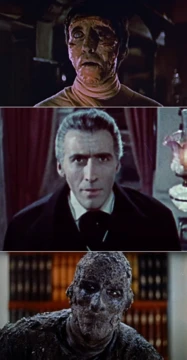
The Hand of Night
A 1968 British horror film set in Morocco.

Wikipedia / Wikimedia Commons
The Hand of Night, also released as *Beast of Morocco*, is a 1968 British horror film directed by Frederic Goode. The screenplay was written by Bruce Stewart, and the cast includes William Sylvester, Diane Clare, and Aliza Gur. The story centers on Paul Carver, an Englishman who has recently lost his wife and children in a car crash. After waking from a nightmare, he is shown on a plane to Morocco, where he tries to meet a doctor, only to learn the doctor has died. In his grief, Carver ends up at the home of a German archaeologist, Otto Gunther, whom he met on the flight. At a party there, Carver meets two women who will shape his fate: Gunther’s assistant, Chantal, and the enigmatic Marissa. Burdened by survivor’s guilt, Carver must choose between Chantal, who represents life, and Marissa, who represents death. The *Monthly Film Bulletin* criticized the film as a dull macabre exercise, noting its reliance on Hammer-style tricks and portentous dialogue, despite effective makeup effects. The *Radio Times Guide to Films* gave it one star, calling it a tedious sub-Hammer horror that combines Dracula themes with Middle Eastern mummy motifs, undermined by bland performances.
- title
- The Hand of Night
- year
- 1968
- country
- United Kingdom
- director
- Frederic Goode
- writer
- Bruce Stewart
- genre
- Horror
Lore & Background
The Hand of Night was released in 1968 as a British horror film directed by Frederic Goode. The screenplay was written by Bruce Stewart. The cast includes William Sylvester as the grieving protagonist Carver, Diane Clare as Chantal, and Aliza Gur as Marissa, with Edward Underdown playing the German archaeologist Otto Gunther.
Reader's Guide
The film received negative reviews from contemporary critics. Monthly Film Bulletin described it as a 'rather dull exercise in the macabre' that relied on old Hammer production tricks without original variations, noting the portentous dialogue and a species of 'lily-livered vampirism.' The Radio Times Guide to Films gave it 1/5 stars, calling it a 'tedious sub-Hammer horror filler' with bland performances, though it acknowledged the exotic locations. The film is notable for combining Dracula mythology with Middle Eastern mummy motifs, but critics found it lacking in originality.
Did You Know?
- The film is also known as Beast of Morocco.
- The opening credits feature pink mist billowing from the eye socket of a skull.
- The plot involves a German archaeologist named Otto Gunther.
- The film was written by Bruce Stewart.
More in British horror films 1-24
Spotted an error? Know more?
This is a living reference — every entry is fact-audited, and reader corrections feed straight into our audit queue. Suggest an edit · See this site's audit record